

Smart Alternator vs DC-to-DC Charger | Mechman®
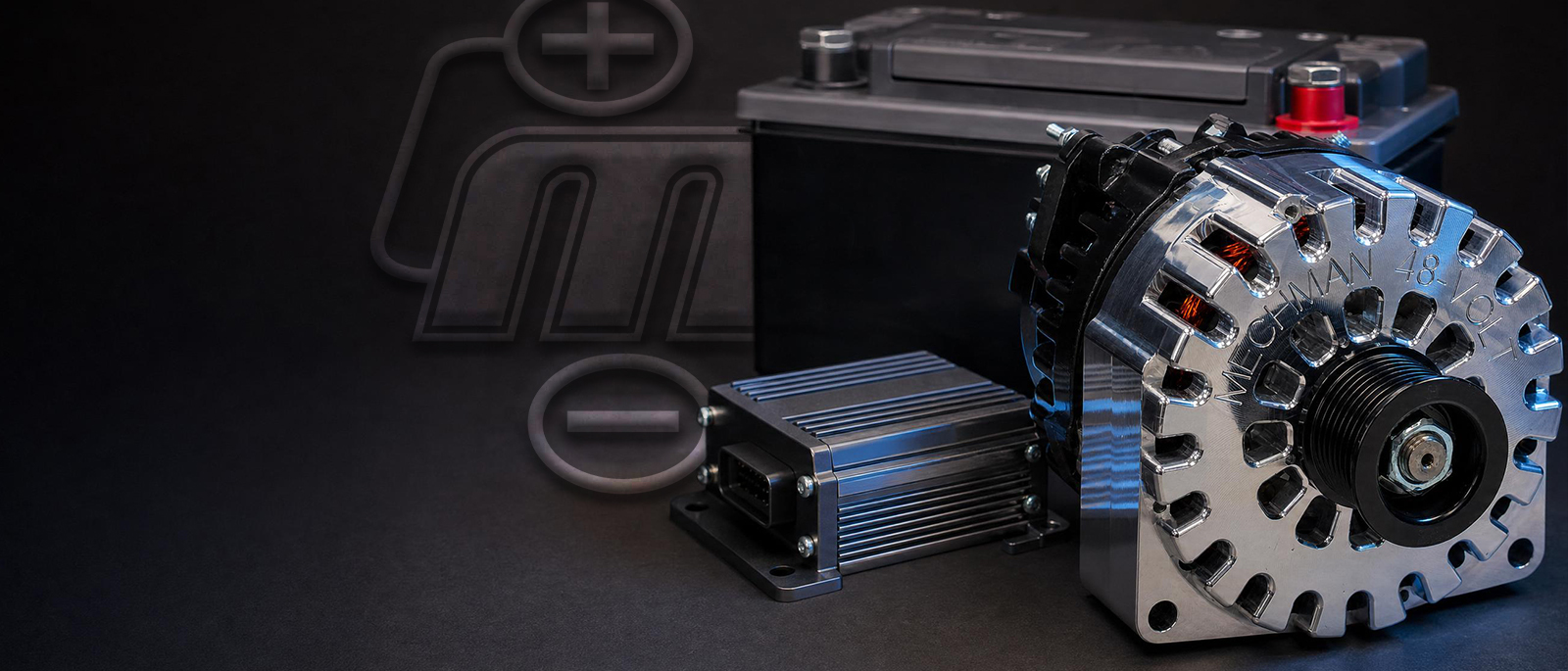
Understanding the Difference
Should I use a DC-to-DC charger or upgrade to a smart high-output alternator?
The answer depends on your power needs, but for customers looking to maximize charging performance, battery recovery speed, and off-grid capability, a properly designed smart high-output alternator often provides significant advantages.
What Is a DC-to-DC Charger?
A DC-to-DC charger takes power from a vehicle's charging system and converts it into a battery charging profile suitable for auxiliary batteries. These devices are commonly used to charge lithium battery banks from a vehicle's factory electrical system.
Most DC-to-DC chargers are available in:
While effective for smaller battery banks, they are intentionally designed to limit charging current.
What Is a Smart Alternator?
A smart alternator is an alternator that communicates with the vehicle's Engine Control Module (ECM) through systems such as:
These systems adjust charging output based on vehicle conditions, battery state of charge, and electrical demand.
Modern smart alternators can be upgraded with high-output designs that maintain vehicle communication while dramatically increasing charging capacity.
The Biggest Difference: Charging Speed
Let's compare a typical setup.
DC-to-DC Charger
~50 Amps
A 50A DC-to-DC charger can provide approximately:
- 50 amps of charging current
- A 400Ah lithium battery bank could require many hours of driving to fully recharge
High-Output Smart Alternator
250+ Amps
A Mechman® high-output smart alternator may provide:
- 250+ amps at cruise RPM
- Significantly higher charging capability
- Faster battery recovery
Instead of spending an entire day driving to recharge batteries, many users can dramatically reduce charging times.
More Available Power
A DC-to-DC charger acts like a bottleneck. Even if the alternator is capable of producing substantial output, the charger limits how much power reaches the battery bank.
A high-output smart alternator increases the available charging capacity directly at the source. Benefits include:
- Faster charging
- More available power
- Better support for large battery banks
- Improved performance under heavy electrical loads
Better for Large Lithium Systems
As battery banks grow, charging requirements increase. Many modern off-grid systems include:
Large battery banks can easily overwhelm the charging capabilities of smaller DC-to-DC chargers. High-output charging systems are often better suited for larger energy storage systems.
Reduced Generator Dependence
One of the primary goals of many RV owners and boondockers is reducing generator runtime. Faster charging means:
- Less generator use
- Shorter charging sessions
- More time enjoying your destination
- Increased energy independence
Supporting Modern Power Demands
Today's mobile power systems often support:
- Air conditioners
- Starlink® internet
- Refrigerators
- Induction cooktops
- Power tools
- Mobile offices
- Medical equipment
These systems consume significant amounts of energy that must eventually be replenished. A higher-capacity charging system helps keep up with modern electrical demands.
Which One Is Right for You?
When a DC-to-DC Charger Makes Sense
- Small battery banks
- Basic camping setups
- Light-duty auxiliary systems
- Applications with modest charging requirements
For many users, a DC-to-DC charger is a simple and reliable charging solution.
When a High-Output Smart Alternator Makes Sense
- Fast charging is important
- Large lithium battery banks are installed
- Significant electrical loads are present
- Maximum off-grid capability is desired
- Vehicle-powered charging is a primary energy source
The Best Solution May Be Both
Many advanced electrical systems combine:
- Smart high-output alternators
- DC-to-DC chargers
- Lithium battery banks
- Solar charging
- Inverters
The ideal system depends on battery size, charging goals, vehicle configuration, and electrical demand.
Why Mechman®?
Mechman® specializes in high-output charging solutions designed to support today's demanding electrical systems. Our smart alternator solutions are engineered to work with modern vehicle charging strategies while delivering substantially more output than factory charging systems.
Whether you're building an RV power system, overland vehicle, work truck, or off-grid charging platform, increasing available charging capacity can significantly improve performance and reduce battery recovery times.
Final Thoughts
A DC-to-DC charger controls and limits charging current. A high-output smart alternator increases the available charging power.
For small systems, a DC-to-DC charger may be all that's needed. For larger lithium battery banks, faster charging, and maximum off-grid performance, a smart high-output alternator can provide substantial advantages.
Find Your Charging Solution
Increase Your Available Charging Power
Find the right high-output smart alternator for your battery bank, vehicle, and off-grid goals — or let our team recommend the ideal charging solution.